
The connector is the electrical interface between your control signal and the solenoid coil.The same valve installed on an outdoor mobile machine and in a dry cleanroom production line requires two very different connector solutions. This guide compares the five connector types offered by Tai-Huei — LW Terminal Box, DL DIN Plug, M4 Pin Type Fast Connector, 2W Two Wires and DT Deutsch Connector — by ingress protection rating, mounting method and operating environment, so you can match the wiring solution to the conditions your equipment actually sees.
In practice, the reliability of a solenoid directional valve depends on far more than the machining accuracy of the valve body. The choice of connector is often what determines whether a machine runs continuously for years or trips a production line. Where the connector design or IP rating does not match site conditions, coolant ingress, metallic dust build-up and vibration-induced loose contacts follow — and an entire automated line can be forced to stop.
Tai-Huei has more than 50 years of experience developing and manufacturing hydraulic valves.Our G02/D03 (1/4" / NG6) and G03/D05 (3/8" / NG10) solenoid directional valve series are available with five connector types — LW, DL, DT, M4 and 2W — covering a wide range of mounting arrangements, wiring requirements and operating environments. The sections below outline the characteristics, typical applications and selection considerations for each.
Further reading: How to Select Hydraulic Solenoid Valve Size: Flow Rating Chart and ISO 4401 Mounting Interfaces
The five Tai-Huei connector types
Five standard wiring types are available, each suited to a different combination of environment and installation constraint.
Wiring Code | Connector Type | Protection Rating | Pins / Poles | Installation / Removal | Connector Features |
|---|---|---|---|---|---|
DL | Din Plug Type | IP65 | 3-Pin (with Ground) | Secured by a retaining screw; loosen the screw for removal. | Built-in LED status indicator with DIN 43650 Form A standard connector. |
LW | Terminal Box Type | Standard Protection | Multiple Terminal Positions | Remove the cover and disconnect the wires individually. | Terminal block wiring with spacious internal compartment, allowing easy rewiring and installation of surge protection or other protective components. |
M4 | M12 4-Pin Type Fast Connector | Standard Protection | M12 4-Pin | Tighten the threaded coupling nut for installation; loosen it for removal. | Threaded locking with foolproof alignment. Enables quick connection/disconnection without rewiring, ideal for smart manufacturing and high-vibration applications. |
2W | Two Wires Type | IP67 | 2 Wires | Direct lead wires; removal requires disconnecting the wires. | Integrated two-wire cable exit design minimizes coil size, making it ideal for installations with limited space. |
DT | Deutsch DT Connector | IP68 | 2-Pin | Push-to-connect with locking latch; press the latch to disconnect. | Features high-performance waterproof seals and heavy-duty dual-guide locking structure, providing superior protection and excellent vibration resistance. |
DL — DIN Plug Type
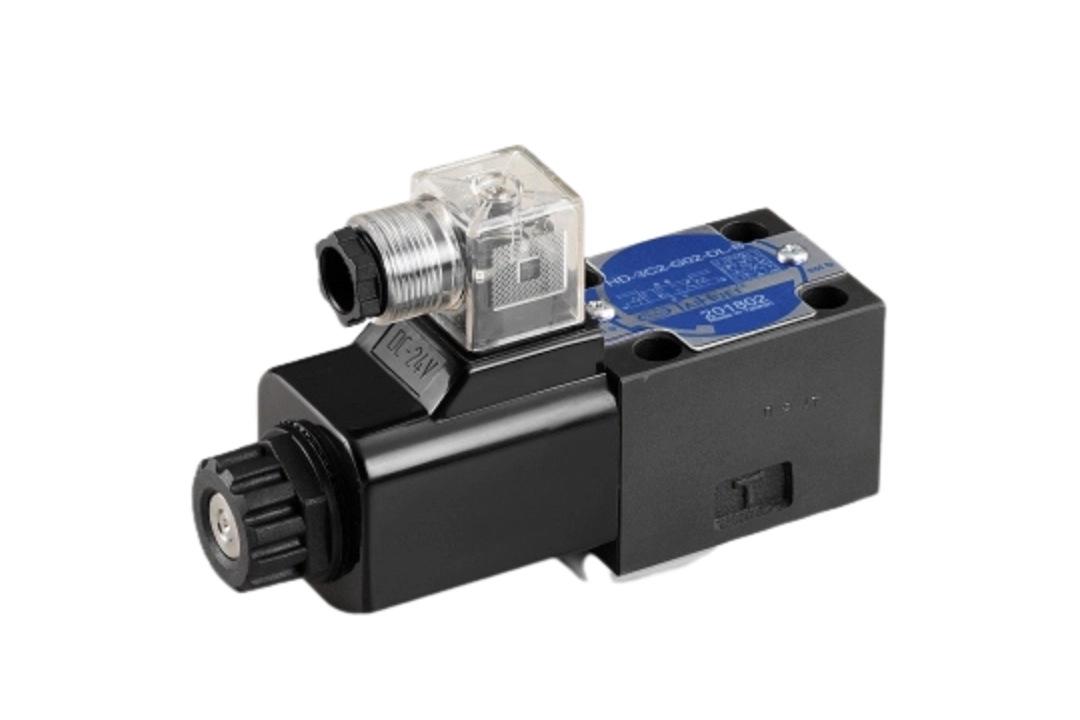
The DL connector conforms to the DIN 43650 Form A standard and incorporates an LED that indicates coil energization in real time. A screw-retained design gives a secure mount with straightforward installation and removal, and the assembly achieves IP65 protection.
Technical features.
When the coil is energized, the integrated LED illuminates. Maintenance staff can confirm at a glance whether the coil has received its control signal. When a fault occurs there is no need to reach for a multimeter first — the indicator alone shows whether the control signal from the PLC is present, which cuts fault-finding time considerably.
Pin assignment.
The standard configuration is a 3-pin connector. Pins 1 and 2 are the supply terminals (AC coils are normally non-polarized; DC coils must be wired to the correct polarity). Pin 3, or a separate terminal, is the protective earth (PE) connection.
Points to note.
DL connectors use different indicator circuits for AC and DC coils. AC versions normally include a rectifier, while DC versions require attention to polarity and to the orientation of any protective components such as flyback diodes. Specifying the wrong version, or wiring it incorrectly, may prevent the LED from illuminating or damage the indicator circuit. Confirm coil voltage, supply type (AC or DC) and connector specification before ordering.
LW — Terminal Box Type
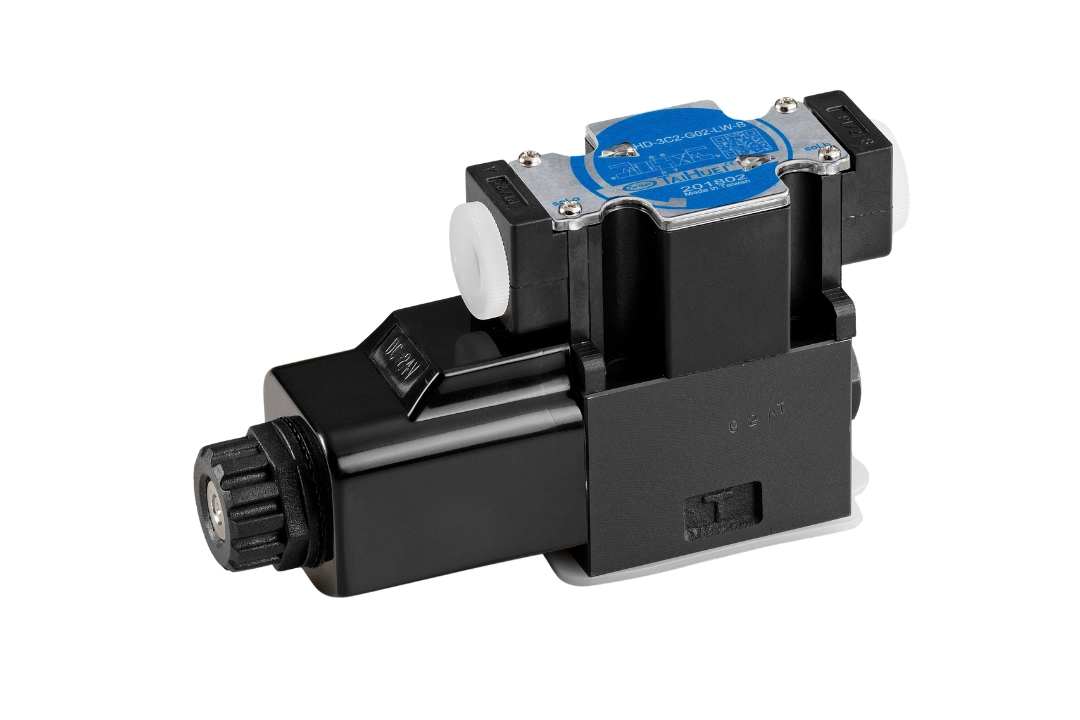
The LW connector uses a dedicated terminal box with internal terminal-block wiring and a built-in surge suppressor. The generous internal volume accepts larger cable cross-sections and improves both wiring convenience and electrical protection.
Technical features.
The box provides ample room to work, accommodating heavier-gauge cable terminated on screw terminals. The result is a secure, maintainable connection well suited to large conductor sizes and long cable runs.
Circuit protection.
De-energizing a solenoid coil generates a reverse voltage transient. The varistor installed inside the terminal box absorbs this surge, reducing stress on PLC output modules, relays and other control components, and extending the service life of the control system.
M4 — M12-4Pin Type Fast Connector (M12-4PIN)
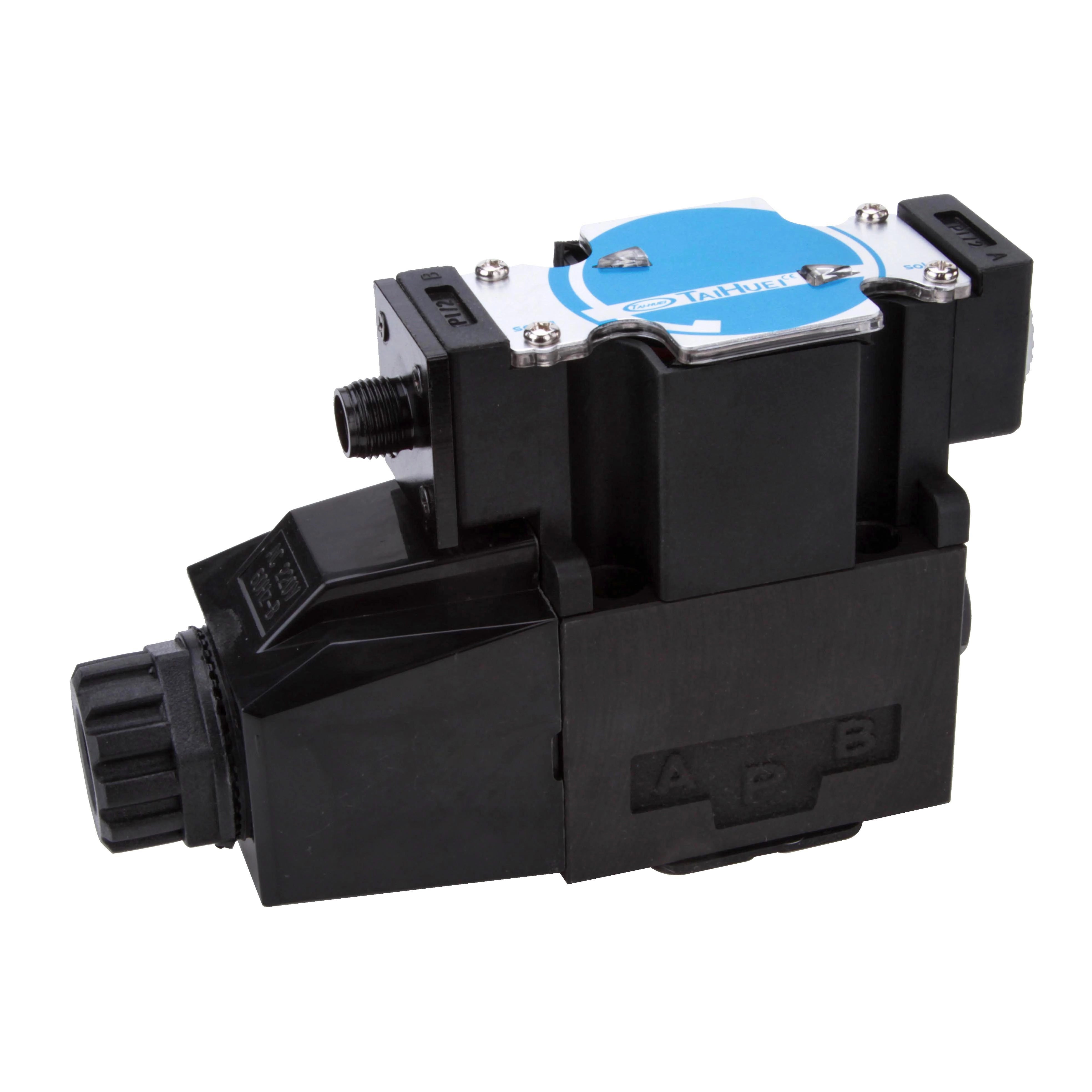
The M4 connector uses a standard M12 4-pin circular format, combining the control signals for both coils of a double-solenoid valve into a single outlet. A metal threaded coupling provides good sealing, vibration resistance and connection stability. Once the machine is wired, servicing requires no re-stripping of conductors or disturbing of terminals — the connector simply unscrews, allowing a rapid valve change with far less risk of wiring error.
Technical features.
The standard M12 4-pin format is keyed against mis-mating and accepts off-the-shelf M12 cordsets, so no field crimping or rewiring is required.
Pin assignment.
Pin 1 — common (COM).
Pin 2 — solenoid A control signal.
Pin 3 — reserved (not used)
Pin 4 — solenoid B control signal.
Application advantages.
The connector interfaces directly with PLCs, distributed I/O modules and IO-Link systems, reducing field wiring complexity and supporting a more modular machine architecture.
2W — Two Wires Type
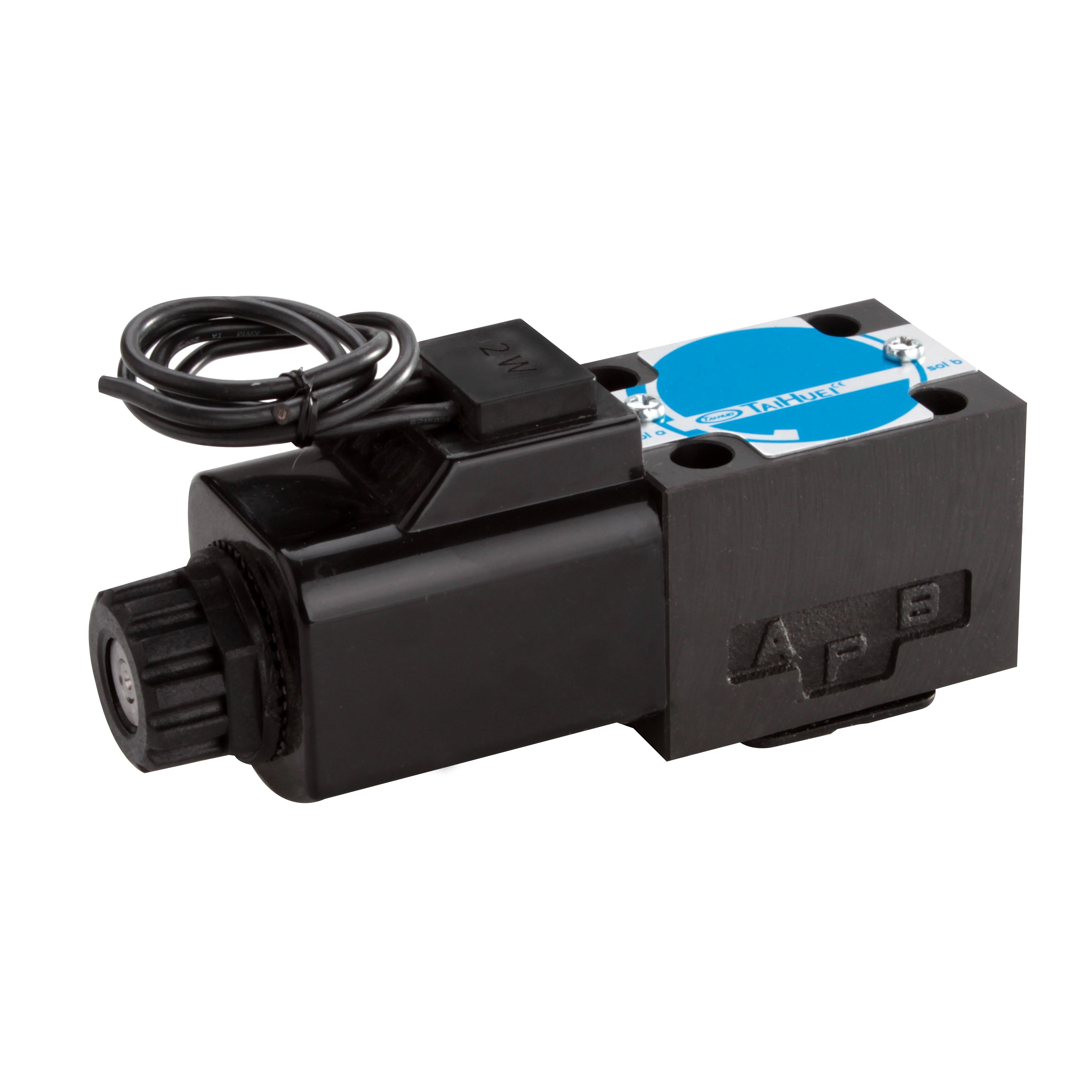
The 2W connector uses a high-protection direct-exit design: two insulated conductors emerge from the coil body itself, potted in a single high-temperature resin molding. Eliminating the external plug and terminal box saves installation space. The assembly achieves IP67, giving effective protection against dust ingress and temporary immersion.
Technical features.
Because the conductors and coil are potted as one piece and sealed at the exit point, the number of external connectors and contact points is reduced — lowering the risk of failure from moisture, oil contamination or intermittent contact, while saving space.
Application advantages.
Well suited to hydraulic power units (HPUs), control cabinets and other space-constrained installations. The leads can run straight to a terminal strip inside the cabinet, reducing the number of wiring interfaces and improving overall reliability.
DT — Deutsch Connector Type
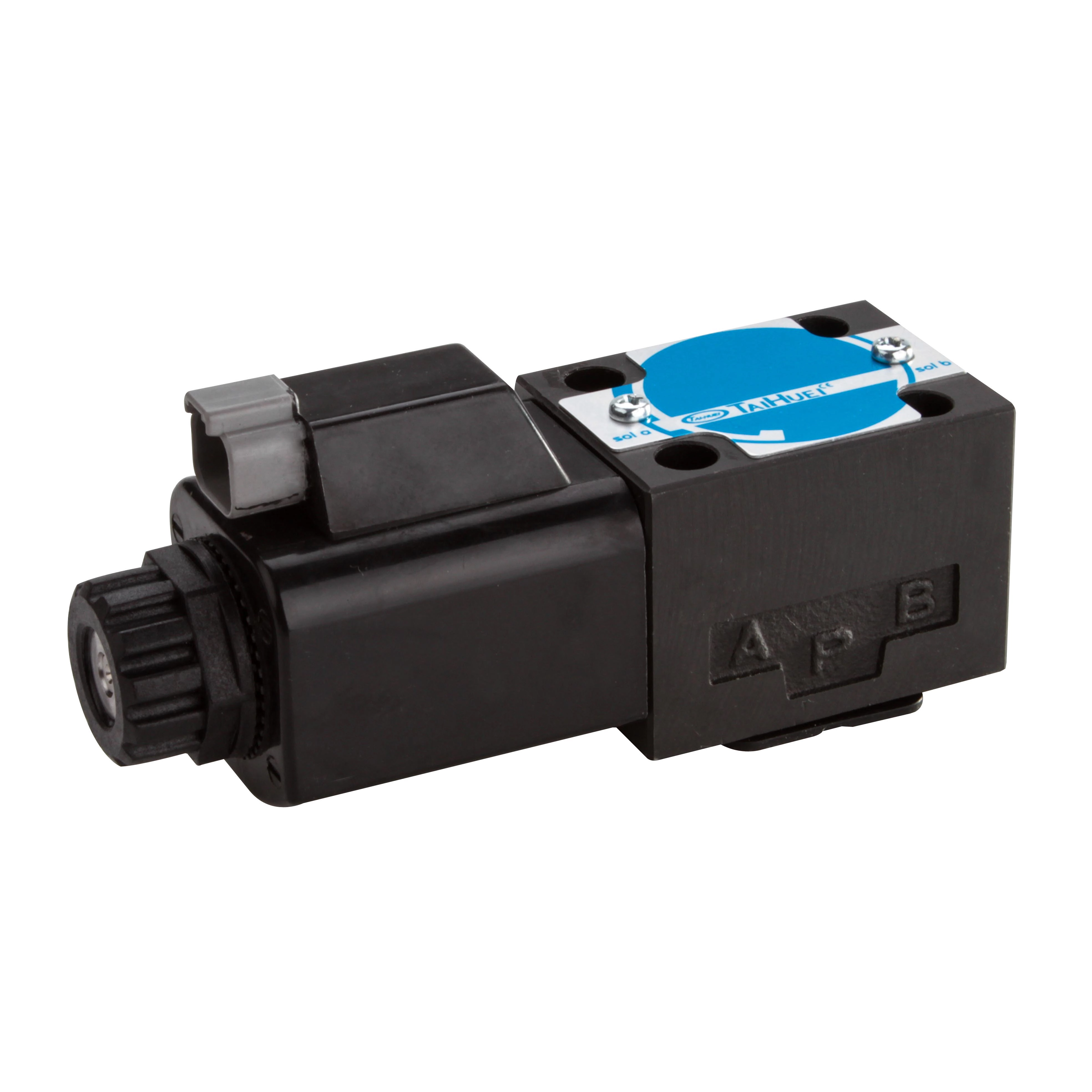
The DT connector uses the Deutsch DT04-2P format, with twin-rail contact design, a high-density O-ring, sealing gaskets and a rubber boot for excellent sealing, weather resistance and vibration tolerance. A latching quick-connect design allows fast installation and removal, and the assembly achieves IP68.
Technical features.
Multiple sealing barriers keep out moisture, oil and dust, reducing contact oxidation and intermittent connection. Electrical performance remains stable even under prolonged outdoor exposure or regular high-pressure washdown.
Application advantages.
The IP68 rating improves reliability where mud, spray, humidity and dust are present, reducing the risk of contact oxidation and signal faults caused by water ingress and contamination. The latching mechanism also reduces the chance of the connector working loose under vibration.
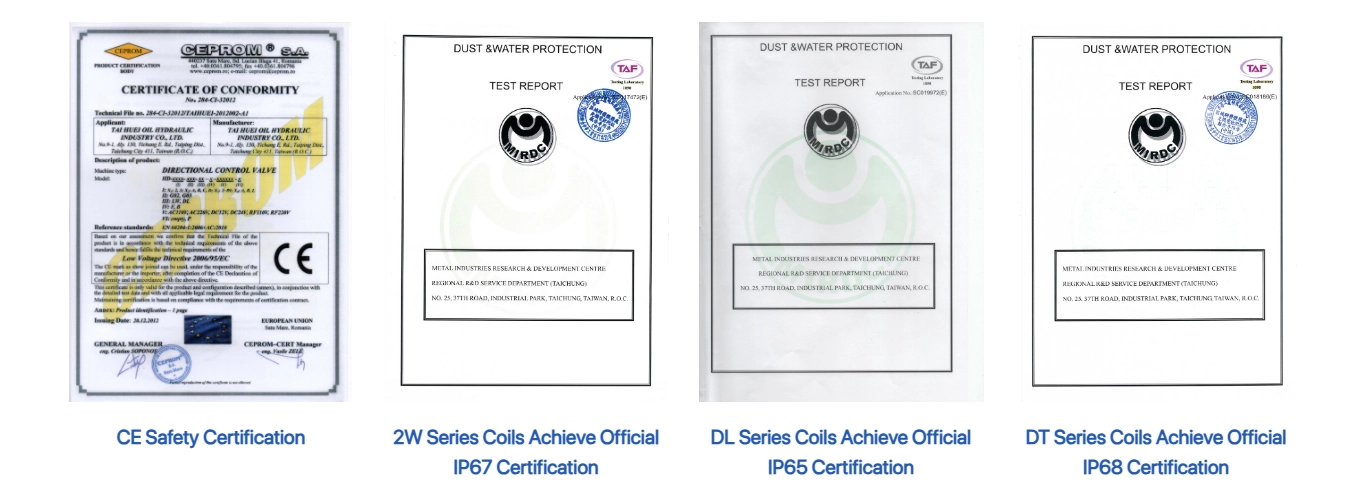
Click to View Tai-Huei Hydraulic Solenoid Valve Coil Protection Rating Test Reports
Further reading: Why Hydraulic Solenoid Valve Coils Overheat and Burn Out: Causes, Prevention and Selection Guide
Application guidance and connector selection
Start by assessing the operating environment, then select the corresponding IP rating and connector format.
DL DIN Plug Type (IP65)
Suitable for general industrial environments, the built-in LED provides a visual indication of coil energization, enabling quick verification of the control signal and reducing troubleshooting time. Ideal for machine tools, automation equipment, and injection molding machines.
LW Terminal Box Type
Ideal for heavy machinery, medium and large scale hydraulic systems, and equipment requiring continuous operation. The junction box design offers flexible wiring, easy maintenance, and ample internal space for future wiring modifications or the installation of protective devices such as surge suppressors.
M4 M12-4Pin Type Fast Connector (M12-4PIN)
Suitable for automated production lines requiring frequent maintenance, tool changes, or valve replacement. The threaded coupling nut allows quick installation and removal, enabling valve replacement within seconds. It integrates seamlessly with distributed I/O and IO-Link systems, making it ideal for semiconductor equipment, automated material handling systems, and lithium battery manufacturing lines.
2W Two Wires Type (IP67)
Suitable for densely arranged valve assemblies and space-constrained installations, including hydraulic power units, compact control cabinets, and outdoor equipment. The 2W connector is an excellent choice for applications requiring long-term operation in damp, dusty, or high-vibration environments where simplified wiring and compact installation are essential.
DT Deutsch Connector Type(IP68)
Designed for demanding outdoor applications involving high humidity, heavy vibration, mud, and water spray, the DT connector is widely used in construction machinery, excavators, port cranes, agricultural machinery, and vehicle-mounted hydraulic systems. Its advanced sealing performance and excellent vibration resistance help minimize the risk of contact oxidation, intermittent connections, wiring failures, and signal interruptions caused by harsh operating conditions.
Choosing the right connector for your machine
No connector type is inherently better than another. What matters is the fit with your equipment, operating environment and maintenance strategy.
Step 1 — Define the operating environment.
Establish whether the equipment runs indoors or outdoors, and whether moisture, oil, dust, coolant or heavy vibration are present.
Step 2 — Select the IP rating.
Determine the dust and water protection the site actually requires, and set the IP rating accordingly.
Step 3 — Assess maintenance frequency.
Consider your maintenance and replacement requirements, and whether quick-disconnect, energization indication or other maintenance-oriented features are worth having.
Step 4 — Confirm wiring and installation space.
Finally, review the control cabinet, manifold and surrounding clearances, and choose the connector that best matches your wiring method and mounting constraints.
If you are unsure which connector is best suited for your installation, contact the Tai-Huei engineering team directly.